
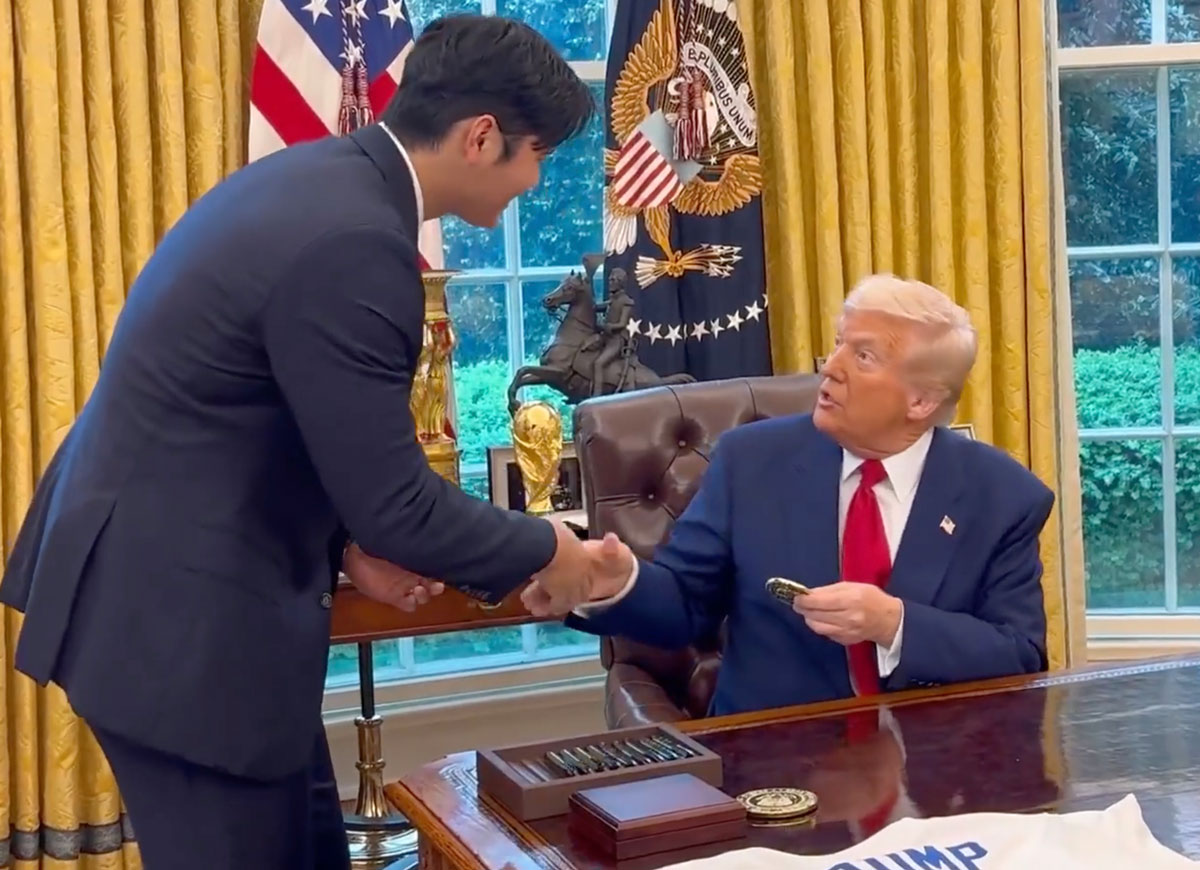
Trump Signs Order Seeking To End NCAA Pay-For-Play Schemes

President Donald Trump has directed members of his Cabinet to develop a plan in the next 30 days aimed at preserving college sports opportunities and preventing college athletes from becoming professionals, according to an executive order he signed Thursday.
Trump’s order sets out specific guidelines for preserving athletic scholarships based on an athletic department’s annual revenue. It also declares that schools should not permit athletes to accept “third-party, pay-for-play payments.” The order states that Secretary of Education Linda McMahon should use future federal funding decisions, among other tools, to force schools to abide by the administration’s policy.
The NCAA has always prohibited pay-for-play payments from third parties. In the past several years, college sports leaders have struggled to find ways to stop boosters at the industry’s wealthiest schools from paying athletes via contracts that are endorsement deals on paper but function in reality as de facto salaries.
“A national solution is urgently needed to prevent this situation from deteriorating beyond repair and to protect non-revenue sports, including many women’s sports, that comprise the backbone of intercollegiate athletics,” Trump stated in the order.
Subscribe to our free weekly newsletter!
A week of sports news in your in-box.
We find the sports news you need to know, so you don't have to.
The executive order states that endorsement deals from third parties should continue to be permitted so long as they reflect a “fair market value.”
The Power 4 conferences launched a new enforcement agency this month, the College Sports Commission, in an effort to vet all third-party deals athletes sign, ensuring they are reasonable payments for endorsements rather than veiled pay-for-play arrangements. It’s not yet clear if or how the administration’s new policy could help strengthen those efforts.
The NCAA’s long-held prohibition on paying athletes has crumbled in the past decade under pressure from a litany of legal challenges and state laws. The association and its power conference formally agreed to an antitrust settlement in June that will allow schools to pay up to $20.5 million directly to their athletes in the coming academic year. Those payments are also designated as endorsement contracts on paper, but likely will serve as de facto salaries.
Steve Berman, one of the co-lead plaintiff attorneys in the antitrust settlement, criticized Trump for trying to intervene.
“Plain and simple, college athletes don’t need Trump’s help, and he shouldn’t be aiding the NCAA at the expense of athletes,” Berman said last week. “As a result of our case, college athletes are now free to make their own deals. For Trump to want to put his foot on their deal-making abilities is unwarranted and flouts his own philosophy on the supposed ‘art of the deal'”

Article by James Van Wickler
Get the most-revealing celebrity conversations with the uInterview podcast!



Leave a comment